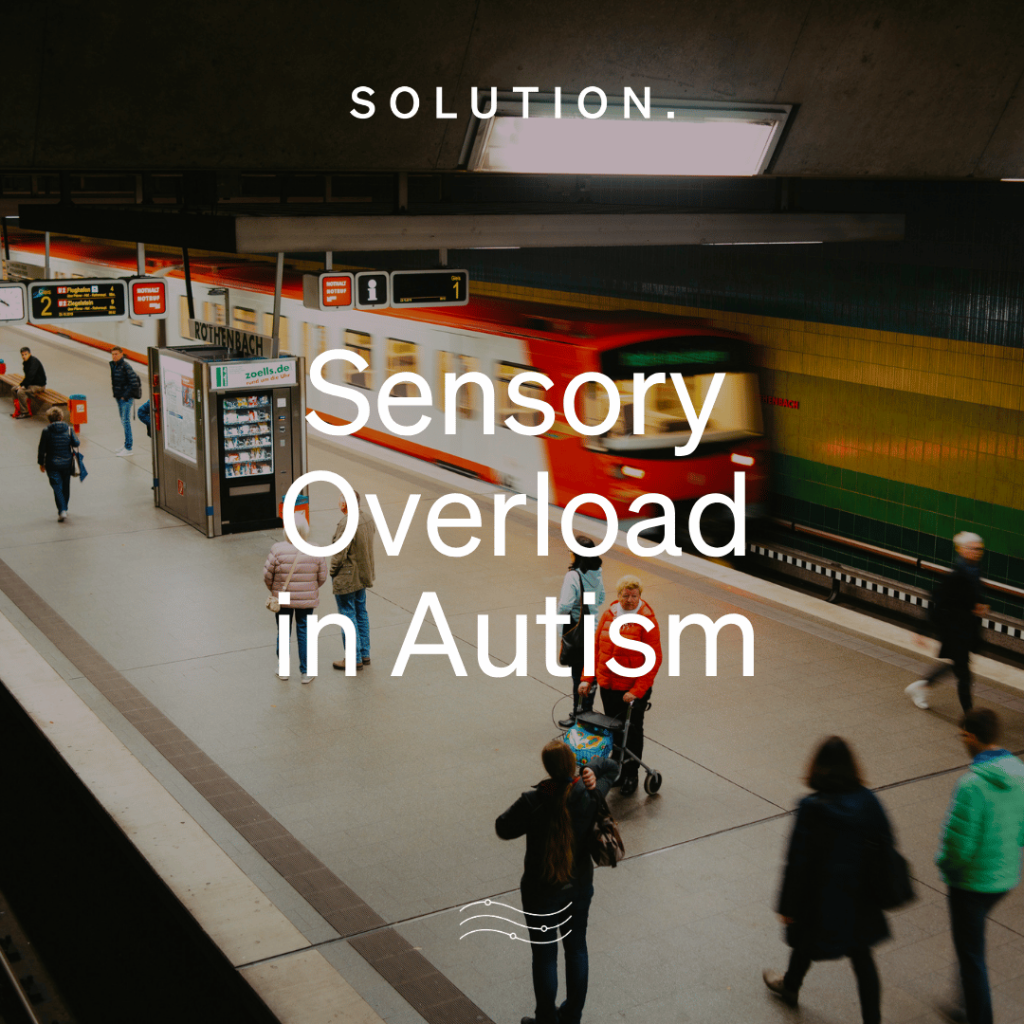
What is sensory overload in autism?
Sensory overload is common in autism and happens when the brain receives more sensory information – such as sights, sounds, smells, or textures, than it can process at once.
This can feel like intense frustration, anxiety, or an urgent need to escape the situation. When the brain reaches capacity, a person may experience difficulty speaking, making decisions, or processing information.
Sensory overload can lead to a meltdown, shutdown, or withdrawal, as the brain works to protect itself from further overwhelm.
What triggers sensory overload?
Everyone’s sensory system is different, but common triggers can include:
- Loud or unpredictable noises
- Bright lights or visual clutter
- Strong smells or certain textures
- Crowded or fast-paced environments
- Multiple sensory demands at once (e.g. talking while music is playing)
Understanding personal triggers is key to prevention and self-regulation.
What does overstimulation look like?
Overstimulation can look different for every person. Signs may include:
- Covering ears or eyes
- Increased movement or fidgeting
- Difficulty focusing or responding
- Irritability, withdrawal, or becoming nonverbal
- Seeking quiet, dark, or enclosed spaces
These are not “behaviours to fix,” but signals that someone is overwhelmed and needs support to regulate.
How to calm down from sensory overload
The goal isn’t to stop sensory overload immediately, but to create safety and space for regulation.
Here are some helpful strategies:
- Reduce sensory input: Step away from the overwhelming environment, dim lights, or use earplugs or noise-cancelling headphones.
- Provide quiet spaces: Move to a calm, low-stimulation area where you can rest.
- Grounding techniques: Try the 5-4-3-2-1 method — identify 5 things you can see, 4 things you can touch, 3 you can hear, 2 you can smell, and 1 you can taste. This helps anchor you to the present moment.
- Ask for help: Let a trusted person know what you need — whether that’s space, quiet company, or help moving somewhere more comfortable.
What are sensory coping tools for autism?
Sensory coping tools are practical strategies and supports that help balance the sensory system before or during overload.
These may include:
- Noise-cancelling headphones or earplugs to reduce auditory input
- Weighted items or compression clothing for calming sensory feedback
- Taking movement breaks (jumping, stretching, or walking)
- Carrying fidget tools or sensory comfort items
- Building predictable routines to reduce uncertainty
- Practising mindful breathing or grounding techniques
Every sensory profile is unique, so it may take time to discover which tools work best for each individual.
What is the 6-second rule for autism?
The 6-second rule encourages giving someone time to process information before repeating or rephrasing it.
For individuals experiencing sensory overload or processing differences, allowing six seconds of silence after speaking gives the brain space to catch up, reducing pressure and frustration.
Final thoughts
Sensory overload isn’t a sign of weakness, it’s the brain’s way of saying “I need a break.”
Understanding triggers, planning supports, and creating safe spaces can help reduce overwhelm and promote comfort in daily life.
If sensory overload is impacting you or your child’s wellbeing, a psychologist can help explore personalised strategies to manage sensory stress and build self-regulation skills.