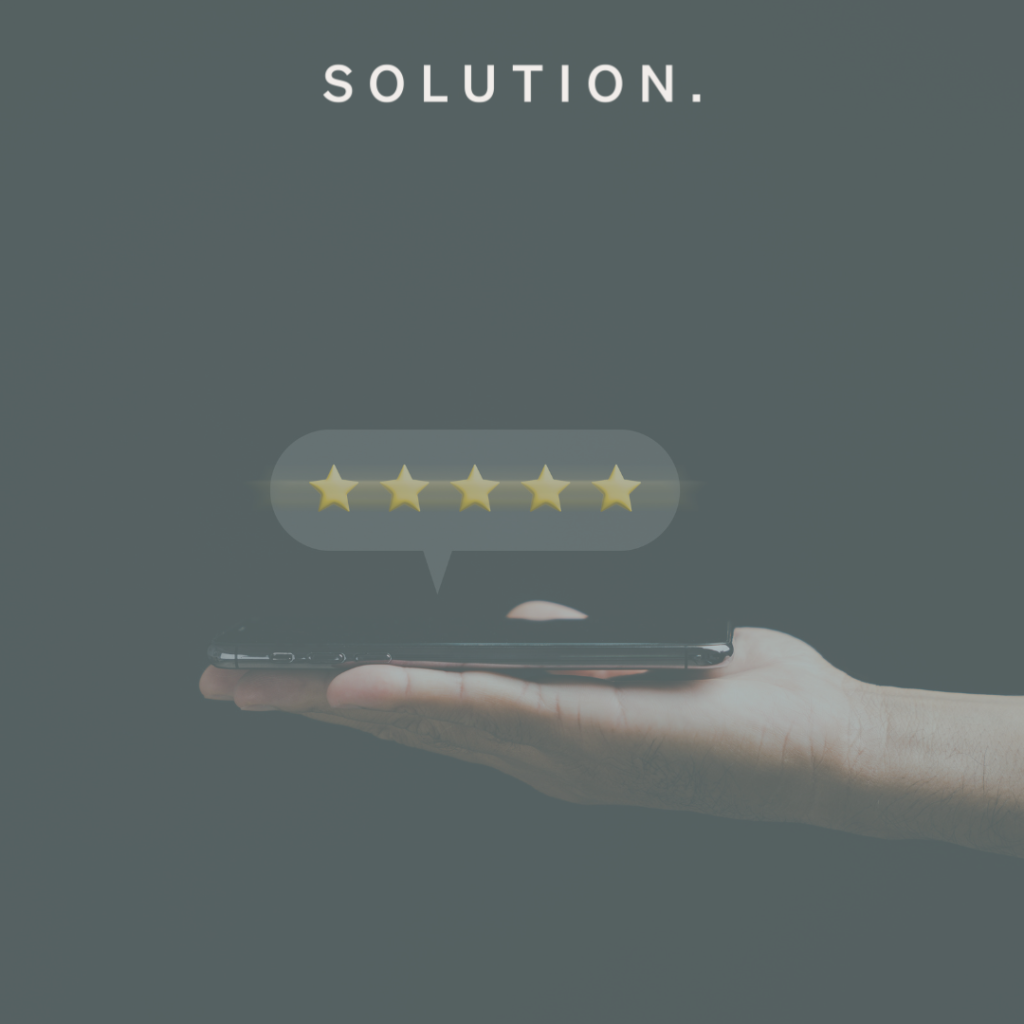
Google reviews have become a normal part of choosing any service from restaurants to trades to hairdressers. But when it comes to psychology, things work very differently. Many people are surprised to learn that psychologists cannot respond to reviews, cannot turn reviews off, and cannot encourage anyone to leave them.
So… why is it all so complicated?
This blog offers a clear explanation of why psychologists can’t engage with Google reviews, how we manage this at Solution Psychology, and how the updated Psychology Board of Australia Code of Conduct (effective 1 December 2025) guides our responsibilities.
Google reviews are public comments that anyone with a Google account can post. In healthcare and especially in mental health this creates unique challenges because reviews may be written by:
- Someone who has accessed a service
- Someone who made an enquiry
- A parent, partner, friend or family member of a client
- Someone who was declined a service due to safety, legal, or conflict-of-interest reasons
- Or, at times, someone posting during a period of distress, frustration, or heightened emotion
Google Reviews in Healthcare: What They Are, Who Leaves Them, and Why They Can Be Complex
Psychologists work with people who may be navigating vulnerability, conflict, crisis, or complex family dynamics. This means a review can sometimes reflect the emotional state of the reviewer, rather than the quality, professionalism, or safety of the service provided.
Positive or negative, the platform does not allow for context, nuance or explanation.
This isn’t unique to Solution Psychology it’s a reality across all mental health professions. And because of strict legal and ethical requirements, psychologists cannot publicly clarify, correct, or provide context for any review, even when it is inaccurate or unfair.
This is where the complexity begins.
Why Psychologists Can’t Respond to Google Reviews
In most industries, a business replies to reviews to offer thanks, clarify misunderstandings, or address concerns.
Psychologists cannot do this. Even a “thank you” is not ok.
Here’s why:
1. Responding breaches confidentiality
Even acknowledging a review confirms that the reviewer was a client. In psychology, simply confirming someone attended your service is private health information. We cannot disclose it under any circumstances.
2. Silence is a legal and ethical requirement
It’s not personal. It’s not avoidance.
It’s a mandatory boundary that protects clients and upholds professional standards.
3. Reviews may involve complex or sensitive situations
Some reviews relate to court matters, child safety, mental health crises, or highly personal circumstances. Psychologists are legally unable to discuss these situations publicly, even to correct misinformation.
4. We cannot defend ourselves without breaching ethics
If a review contains false or incomplete information, addressing it publicly would inevitably expose confidential details. So we must remain silent, even when the review misrepresents what occurred.
Why Testimonials Are Not Allowed in Psychology
Did you also know that Psychologists in Australia cannot use testimonials in advertising. This includes:
- Quotes from clients
- Star ratings
- Public reviews used in marketing
- Social media comments framed as endorsements
Why? Because testimonials can create unrealistic expectations, misunderstandings about outcomes, or comparisons between clients’ experiences. The industry prioritises professional evidence, not personal anecdotes, to protect vulnerable people from being influenced by others’ stories.
This rule applies regardless of whether a testimonial is positive, negative, or neutral.
The Updated Psychology Board of Australia Code of Conduct
(Effective 1 December 2025)
The new Code of Conduct formalises responsibilities that have long existed in practice and under the previous APS Code of Ethics (2007):
- Protecting confidentiality , even in public forums
- Avoiding testimonials in any form of advertising
- Ensuring psychologists do not mislead the public through selective or unverified comments
- Maintaining professionalism across all online interactions
- Safeguarding vulnerable people who may be affected by public commentary
The Code explicitly outlines how psychologists must manage public communication, including review platforms.
This reinforces why our silence online is not only ethical, it’s mandatory.
How We Handle Reviews at Solution Psychology
At Solution Psychology, we take a consistent and transparent approach:
We do not respond to reviews
This applies to all reviews, positive, negative, or neutral.
We cannot request or encourage reviews
Even hinting that reviews are helpful is prohibited.
We do not use reviews or testimonials in marketing
Our advertising is based on evidence, clear information, and professional standards, never on stories about individual client experiences.
We invite private feedback instead
Because we can’t respond to reviews publicly, we make sure our clients have safe and appropriate ways to share their experiences with us directly.
Throughout the year, we send out anonymous surveys where clients can provide feedback about their care, the client experience, and their overall engagement with our clinic. This allows us to continually improve our services while protecting confidentiality and respecting the ethical boundaries that apply to all psychologists.
Why We Must Remain Silent, Even When a Review is Inaccurate
This is often the hardest part for those outside our industry to understand
A psychologist reading an unfair or incorrect review knows they cannot defend themselves.
Not because they agree with it.
Not because they lack evidence.
Not because they don’t care.
But because responding would violate:
- Confidentiality laws
- Ethical duties
- Professional boundaries
- The Psychology Board Code of Conduct
- The trust clients place in us
Psychologists must prioritise client dignity and privacy above public perception.
That is the foundation of ethical healthcare.
So while the silence may feel uncomfortable, and sometimes unfair, it reflects the highest standard of professional conduct.
What About Google’s Rules?
Google allows businesses to respond to reviews.
But Google also expects regulated professionals to comply with their governing laws and codes.
For psychologists, this means:
- We can report reviews that breach Google’s policies (e.g., harassment, misinformation, conflict of interest)
- But we still cannot publicly address the content of the review
- And we cannot stop Google from publishing reviews on our listing
It’s also important to know that Google very rarely removes reviews, even when clinics provide clear evidence that the review is false, unfair, or written by someone who was never a client. Most reports are closed without action, especially in healthcare, because Google does not independently investigate context or clinical circumstances.
Google gives the platform.
Professional ethics determine how (and if) we can use it.
Why This Matters
Psychology is built on trust, safety, and confidentiality.
While Google reviews may be helpful for other industries, (this doesn’t dismiss that they can also significantly impact small businesses like cafes and local services), in psychology however, the difference is that they are not a reliable or appropriate reflection of psychological care because the psychologist cannot participate in the conversation.
Our priority will always be:
- Protecting the privacy of the people we support
- Providing evidence-based care
- Upholding ethical and legal requirements
- Communicating responsibly and transparently
Even when we cannot speak publicly.
What This Means for You
Does this mean you cannot leave a review?
No. Google reviews are open to the public, and anyone is free to write one.
What it does mean is that:
- We cannot ask you to leave a review
- We cannot encourage or suggest that you leave one
- We cannot respond to any review once posted
- And we cannot clarify or correct anything publicly
If you choose to share your experience online, that is entirely your decision but our ethical and legal obligations mean we cannot participate in that conversation in any way.
A Confidential Way to Share Feedback
If you’d like to share your experience confidentially:
If you would like to share feedback about your experience at Solution Psychology, you are welcome to contact us privately. This allows us to receive feedback safely, confidentially and in a way that protects your privacy. You can reach us at info@solutionpsychology.com.au or if you prefer we regularly send anonymous feedback surveys to current clients, which allow you to reflect on your experience privately.
We genuinely appreciate feedback shared directly with us it helps us continue to improve while ensuring your personal information remains private and protected.
References
APS Code of Ethics (2007)
Australian Psychological Society.
APS Code of Ethics.
AHPRA – Guidelines for Advertising Regulated Health Services
Australian Health Practitioner Regulation Agency (AHPRA).
Guidelines for advertising regulated health services.
Psychology Board of Australia – Code of Conduct (effective 1 December 2025)
Australian Health Practitioner Regulation Agency (AHPRA) & Psychology Board of Australia.
Code of Conduct for Psychologists.