Have you ever heard the acronym “CBT” and wondered what it actually means? You’re not alone. Many clients hear “CBT” mentioned throughout their therapy journey without fully understanding what it involves, and that’s completely normal. In this post, we’ll break down what CBT is, how it works, and how to determine whether it might be a good fit for you and/or your child.
What is CBT?
So, what does CBT stand for? CBT stands for Cognitive Behavioural Therapy.
- Cognitive = the things you think
- Behavioural = the things you do
- Therapy = the treatment or support process
CBT is based on a simple yet powerful idea: the way you think influences how you feel, and how you feel influences what you do. These three areas (thoughts, feelings, and behaviours) are closely connected. Your thoughts affect your emotions, your emotions shape your actions, and your actions can reinforce your thoughts, creating a cycle.
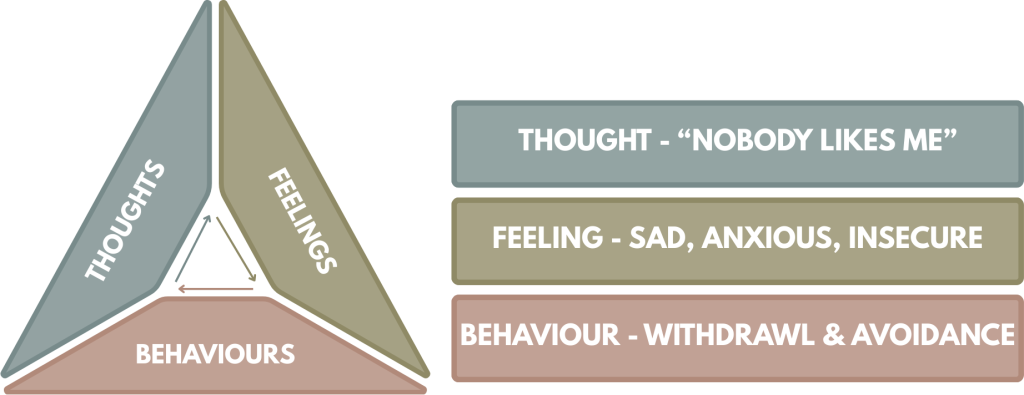
CBT helps you recognise patterns within this cycle and equips you with practical tools to challenge unhelpful thoughts, leading to healthier emotions and more constructive behaviours over time.
How is CBT delivered?
CBT can be delivered in many ways – which is part of what makes it so effective for children, teens, and adults alike! It is a structured, goal-oriented approach that focuses on building practical skills to manage challenges more confidently.
Sessions are collaborative and tailored to the individual’s age and needs. With children and teens, therapists often adapt their approach to be engaging and developmentally appropriate, while still helping them understand the link between their thoughts, feelings, and behaviours. With adults, sessions may involve more direct reflection and discussion, but the core principles remain the same.
There are lots of different techniques involved in the delivery of CBT, including exploring unhelpful thought patterns, learning coping strategies, and practicing new ways of responding to challenging situations. The emphasis is always on practical, real-life skills that can be applied outside of sessions, helping children, teens, and adults build confidence, resilience, and a greater sense of control over their thoughts, feelings, and behaviours.
How effective is CBT?
CBT is often regarded as the “gold standard” of therapy, with strong research evidence supporting its effectiveness for children, teens, and adults experiencing various mental health challenges, including anxiety and depression.
Rather than focusing solely on talking about feelings, CBT equips individuals with practical strategies to recognise unhelpful thought patterns, challenge them, and develop healthier ways of thinking and coping – fostering meaningful, lasting improvements in daily life.
How do I know if CBT is for me?
CBT is an active approach. You practice new skills, track thoughts, and complete exercises outside sessions. If you like practical, hands-on approaches, it may be a good fit!
CBT works best when you have clear goals, like reducing symptoms or improving coping skills. And the best part is, you don’t have to figure it out alone, your clinician will guide you in deciding whether CBT is the best fit for you and/or child’s therapeutic journey.
For more information, feel free to contact us on (03) 9988 7760 to book in a session today.